
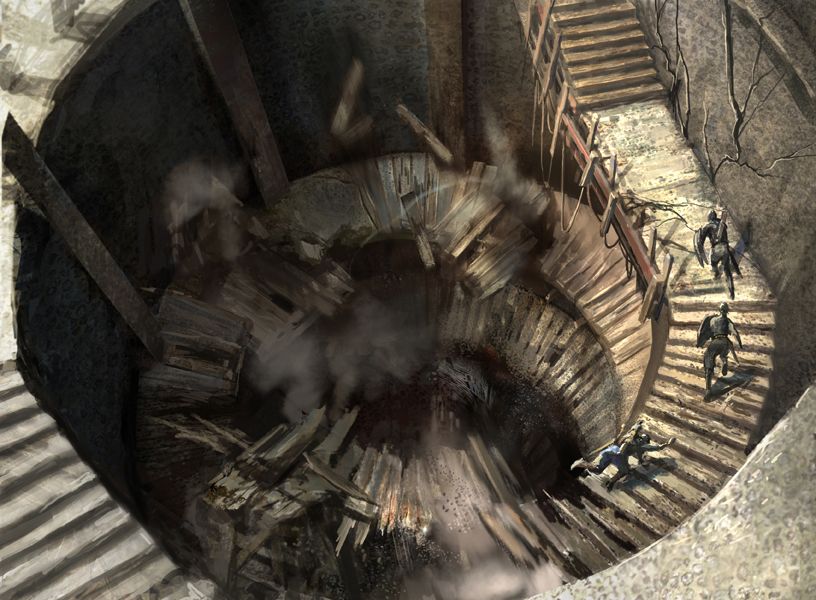

Quanto è probabile assemblare Tron al turno 3?
Matematica e simulazioni per capire le vere probabilità di Tron al turno 3 e il valore di Expedition Map.

Hypergeomancer
Matematico
This Monday, many competitive Pauper players were shocked to learn about Seeker of Skybreak 's ban. It was the fastest-ever action in the format's history, pre-bans excluded, and it raised questions about the Pauper Format Panel's methodology.
In this article, I won't focus much on establishing whether the Seeker of Skybreak combo was too strong or not, because that's not what the Pauper Format Panel's statement is about. I will highlight the flaws in the philosophy that led the Pauper Format Panel to the ban, and I will draw some general conclusions from how the whole story unfolded.
Let's start breaking down the official announcement.
The Naya Gates deck has won all three Magic Online challenges at the time of writing this article, and sideboards are full of cards to help fight against this deck.
Three Challenges over two days aren't a meaningful sample for evaluating a new deck. The results are highly sensitive to variance, and they tell us almost nothing about how the metagame can adapt. But let's discuss the second part of this sentence, which I find ambiguous. I will address both possible meanings:
After a lot of discussion over the past two weeks, we have decided that cheap and easy-to-run two-card combinations are not something we think are healthy for Pauper. If they're more expensive to cast or require more pieces, that can be fine — I want to stress that combos themselves are not something we are against — but letting players run eight cards that can be easily slotted into a deck a la Basking Broodscale (or Splinter Twin) and that can combo this quickly is a play pattern that we want to keep out of the format.
This statement is just unrealistic. They say they aren't against combo per se, but how can a combo deck ever be tier 1 while complying with their standards?
Creature combo decks requiring multiple pieces, such as Goblin Combo and Walls Combo, have succeeded in the past. The format, however, has become much more powerful. Today, a creature combo deck that needs three or more cards is unlikely to become a serious tier 1 contender. If two-card combos are ruled out on principle, relevant creature combo decks effectively disappear from Pauper.
This is particularly alarming because in a creature-centric format like Pauper, creature-based combo decks are the most honest and interactive combo decks that I can imagine. If even those are banned for philosophical reasons, I can't imagine other kinds of combo decks surviving in tier 1.
On the other hand, the Pauper Format Panel let a spell-based combo deck like High Tide survive for 8 months, giving it a lot more leeway than Seeker of Skybreak, despite being a significantly less interactable combo deck. So I might be missing something about their hierarchy of values. But they did eventually ban High Tide, so I doubt we're going to see spell-based combo decks in the future.
That still doesn't cover every possibility. We also have graveyard-based combo decks such as Cycling Storm, and mixed combo decks such as Gruul Storm, which uses both creatures and spells. Suppose one of these decks received enough support to become tier 1. Would the Pauper Format Panel allow it to remain legal? Maybe. They haven't explicitly taken a stance against these archetypes. Then again, I'd place them somewhere between Seeker of Skybreak or Basking Broodscale and High Tide or Chatterstorm on the spectrum of fairness. If Seeker of Skybreak and Basking Broodscale are already considered unacceptable on principle, it's hard to imagine Cycling Storm or Gruul Storm surviving for long as tier 1 decks.
You might recall that I'm not against philosophically motivated bans, as I wanted a High Tide ban on that basis. But spell-based combo decks are the only kind of combo deck that I wouldn't allow in Pauper, due to a lack of relevant interaction in the format. In my opinion, other kinds of combo decks should receive the same scrutiny as any Pauper deck, i.e. only get banned if they are too strong. I'm not against combo in general. The Pauper Format Panel claims to be in the same boat, but its actions speak differently.
A healthy Magic ecosystem needs combo decks. Moreover, Pauper is many players' first introduction to competitive Magic and is a great place to learn Magic fundamentals. For me, that education included learning how to play both with and against combo decks. I hope future players get the same opportunity.
Now, let's look at question two: What are the odds we ban a card on August 10 if we don't ban one now?
Well, given our discussion around the first question, we would say the odds are extremely high.
This confirms that the Seeker of Skybreak ban doesn't have power level in mind. It's a ban on principle, and I fundamentally disagree with that, for the reasons stated above.
In a format like Pauper, which can stay consistent for long stretches of time, having something new show up, even if temporarily, can be nice.
This is another important point. The last time a new tier 1 deck emerged was in April 2025, with Mono Red Madness, more than one year ago. And the last time that a new card gave rise to a new tier 1 deck was with MH3, more than two years ago.
A stable format certainly has its upsides, but some change is required to keep players engaged. The discontinuation of Masters sets, draftable Commander sets, and Modern Horizons has left Pauper players with few opportunities to receive new cards that can compete with the established staples for the foreseeable future.
In this situation, the rare additions to the format are particularly cherished, and banning a new combo without even giving it a chance to show whether and how powerful it is leaves many players utterly demoralized and disenfranchised.
While we've been looking at Sneaky Snacker for a while, having this deck showing up and be yet another Sneaky Snacker deck was not lost on us. And while it was still right for us to ban the combo given our goal of avoiding cheap and resilient two-card combos, we want to take a very serious look at Sneaky Snacker.
I talked about the Sneaky Snacker situation in my last article. I don't have a strong opinion on a Sneaky Snacker ban, but I'm glad it's being discussed. I think the ban would be reasonable because Sneaky Snacker heavily warps the meta, but I worry about the potential consequences, which are very hard to predict. After mono red got two cards banned in recent times, Sneaky Snacker is the last thing keeping some version of mono red competitively viable.
The most troubling part of how the Pauper Format Panel handled Hawkeye's Bow is how they fueled widespread panic on the internet. The card wasn't even out yet, and the Pauper Format Panel was asking on social media whether it should be banned. Nobody I know was particularly worried during spoiler season. To me, it felt like the Pauper Format Panel was waving the ban hammer in search of a problem.
This situation generated the biggest mobilization of internet commenters I've ever seen in the context of Pauper. Every social media platform was flooded with comments demanding a ban or talking as if the ban was a foregone conclusion. I could tell that most of those people weren't familiar with Pauper, as I kept reading outlandish takes that revealed a lack of basic format knowledge.
Now, not being knowledgeable in Pauper isn't a sin. It's always great to see new people discovering the format. I just wonder what is to be gained from asking the internet how to manage the format, when it's well established that internet commenters often overestimate their knowledge of any topic.
Maybe the fact that the panel members are all public figures is an incentive for them to seek external validation. Anonymity would better serve those who manage a format.
The Pauper Format Panel took over when Pauper was still a very niche format. In recent years, Pauper has grown a lot and is now the first or second most popular 60-card format in several regions of the world, regularly bringing around a thousand people together for Paupergeddon.
We should give the Pauper Format Panel their flowers for being part of this period of massive growth for the format. Nonetheless, I'd be happy to see Pauper take a step further and go back to being managed by Wizards of the Coast, like every real 60-card format.
This would grant anonymity to the decision-makers, but it would also save them from a strange conundrum that current Pauper Format Panel members find themselves in. Because Pauper Format Panel members are active players, people naturally expect them to participate in major tournaments to stay connected with the format. At the same time, the increasing stakes of those events would create a perception of a conflict of interest. WotC employees wouldn't face the same tension.
The Seeker of Skybreak ban exposed structural problems in the way Pauper is managed: incoherent and unrealistic principles, public pressure influencing decision-making, and panel members placed in an inherently awkward position. As the format continues to grow, a better framework should be found.
Explanation of Pauper Seeker of Skybreak Ban for June 29, 2026
Riguardo l'autore
Walker735 on Magic Online. Golden Pigs member and Paupergeddon finalist.
Paolo Donfrancesco
Walker735
Altri articoli correlati
Matematica e simulazioni per capire le vere probabilità di Tron al turno 3 e il valore di Expedition Map.
Hypergeomancer
Matematico
Showcase Qualifier Winner
Pietro Bragioto
Scribacchino di liste
Commento al Ban di Seeker
Pietro Bragioto
Scribacchino di liste